NASA’s Johnson Space Center Marks 65 Years of Human Spaceflight Leadership
From the Apollo era to the Artemis program, the Houston facility remains central to American space exploration.
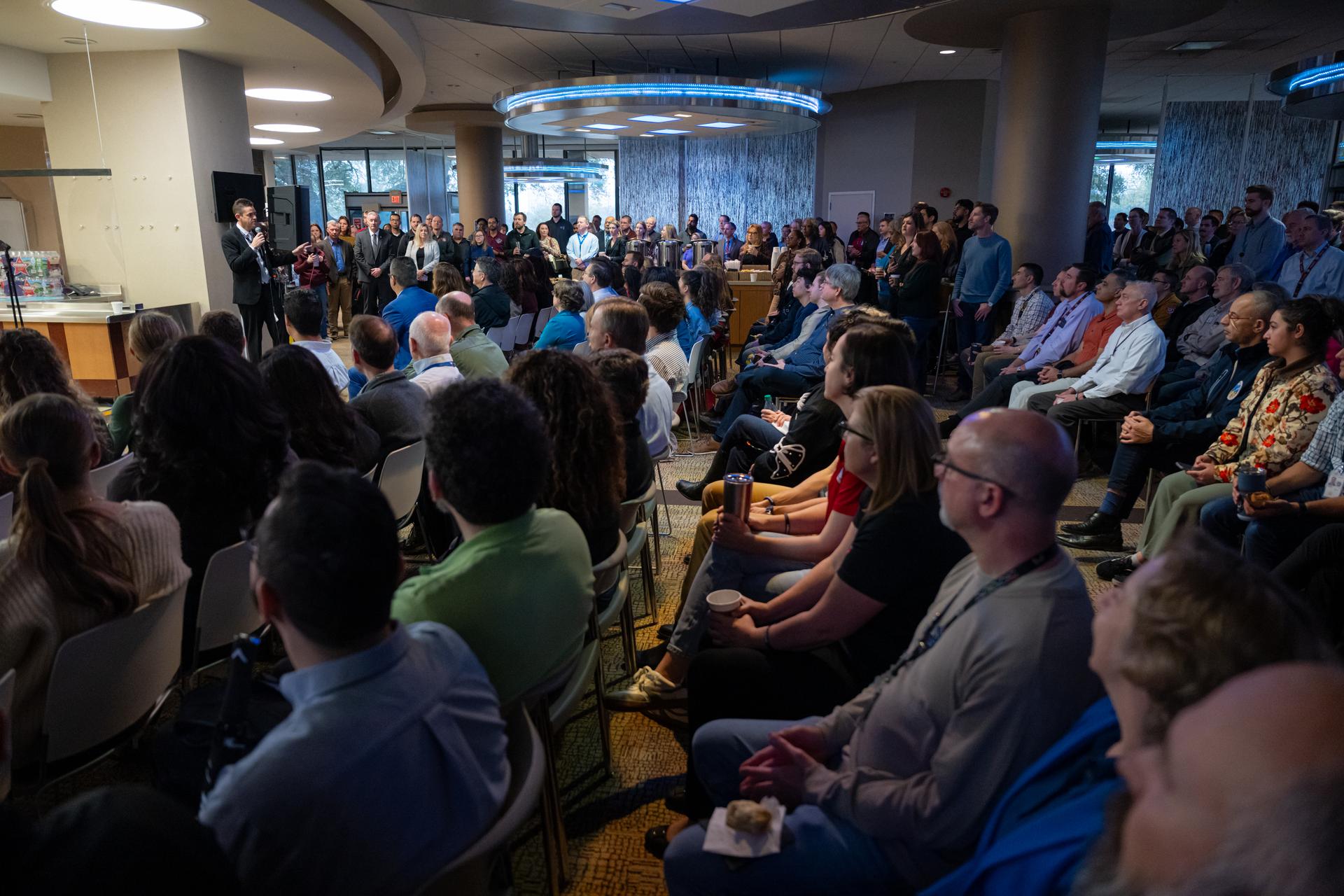 Photo: NASA / NASA/John Kraus
A Legacy of Exploration
For 65 years, NASA’s Johnson Space Center in Houston has functioned as the primary site for the United States' human spaceflight initiatives. Since its inception, the center has supported a wide range of missions, spanning from the early days of Project Mercury to the contemporary Artemis program. Today, the facility is recognized as NASA’s Center of Excellence for Human Spaceflight, housing the nation’s astronaut corps and the Mission Control Center.
Origins and Development
The center’s history traces back to May 25, 1961, when President John F. Kennedy addressed a joint session of Congress, pledging to land a human on the Moon and return them safely before the decade concluded. At the time, the Space Task Group was managing Project Mercury at the Langley Research Center in Virginia, but the scope of the lunar mission necessitated a larger, dedicated facility. Following a national search, NASA announced on September 19, 1961, that the new Manned Spacecraft Center would be located near Houston, Texas. The agency officially established the center on November 1, 1961, with construction commencing in 1962.
Growth and Renaming
During the initial construction phase at the Clear Lake site, staff operated out of 13 leased buildings across southeast Houston. The first employees began moving onto the permanent campus in late 1963. In 1973, the facility was renamed the Lyndon B. Johnson Space Center to honor the former president for his consistent support of the American space program. Over the subsequent decades, the campus has continuously expanded to meet the evolving requirements of various spaceflight programs.
Administrative Evolution
The center’s primary administration building, originally designated as Building 2, saw the start of construction on December 5, 1962, with completion in March 1964. Robert Gilruth, the inaugural director of the center, occupied his office on the top floor of this building on March 5, 1964. In a later administrative change on June 30, 1974, this building swapped its designation with the Public Affairs Building, which had been known as Building 1.
Advancements in Training
Training for spacewalks has undergone significant technological shifts at the center. The use of neutral buoyancy for such training began with the Gemini XII mission in 1966. By 1967, the Water Immersion Facility was installed to support Apollo and pre-Shuttle training. As space shuttle payloads grew, training transitioned to the Weightless Environment Training Facility in 1980. This was eventually replaced in 1997 by the Neutral Buoyancy Laboratory at the Sonny Carter Training Center, which currently supports space station training, suit testing, and lunar surface activity simulations.
Lunar Receiving and Research
To mitigate the risk of back contamination from potential lunar microorganisms, NASA constructed the Lunar Receiving Laboratory in Building 37, with work beginning in August 1966. Astronauts from the Apollo 11, 12, and 14 missions underwent a three-week quarantine in this facility upon their return. Following the conclusion of the Apollo program, the building housed the Life Sciences division until 2017. The site was later demolished, and in 2026, the Lunar Receiving Park was dedicated to commemorate the laboratory’s history.
Mockup Facilities
Building 9, which began construction in December 1965, has served as a critical site for spacecraft mockup training. In 1969, a portion of the building was adapted to include a lunar surface simulation for Apollo 11 training. Following an expansion in 1974, the facility supported training for all 135 space shuttle missions. Further extensions in the late 1980s allowed for the inclusion of mockups for Space Station Freedom and the International Space Station. Today, the facility, now known as the Space Vehicle Mockup Facility, houses Orion spacecraft mockups and the Active Response Gravity Offload System.
Current Operations
The center currently manages a diverse portfolio of programs. Houston serves as the base for the Low Earth Orbit Program, which encompasses International Space Station operations and various commercial partnerships. For deep space exploration, the center manages the Moon Base Program and the Orion Program. Additionally, the Human Health and Performance Directorate and the Human Research Program are tasked with ensuring the health and performance of crews as missions venture further from Earth.
This story was prepared with AI assistance from the sources listed below and reviewed by our editors.
Sources
Related stories

NASA's NEO Surveyor Sunshade Under Inspection
A technician was observed inspecting the sunshade for NASA's Near-Earth Object (NEO) Surveyor mission, a structure designed to maintain the infrared space telescope's temperature and provide power during its search for asteroids and comets.
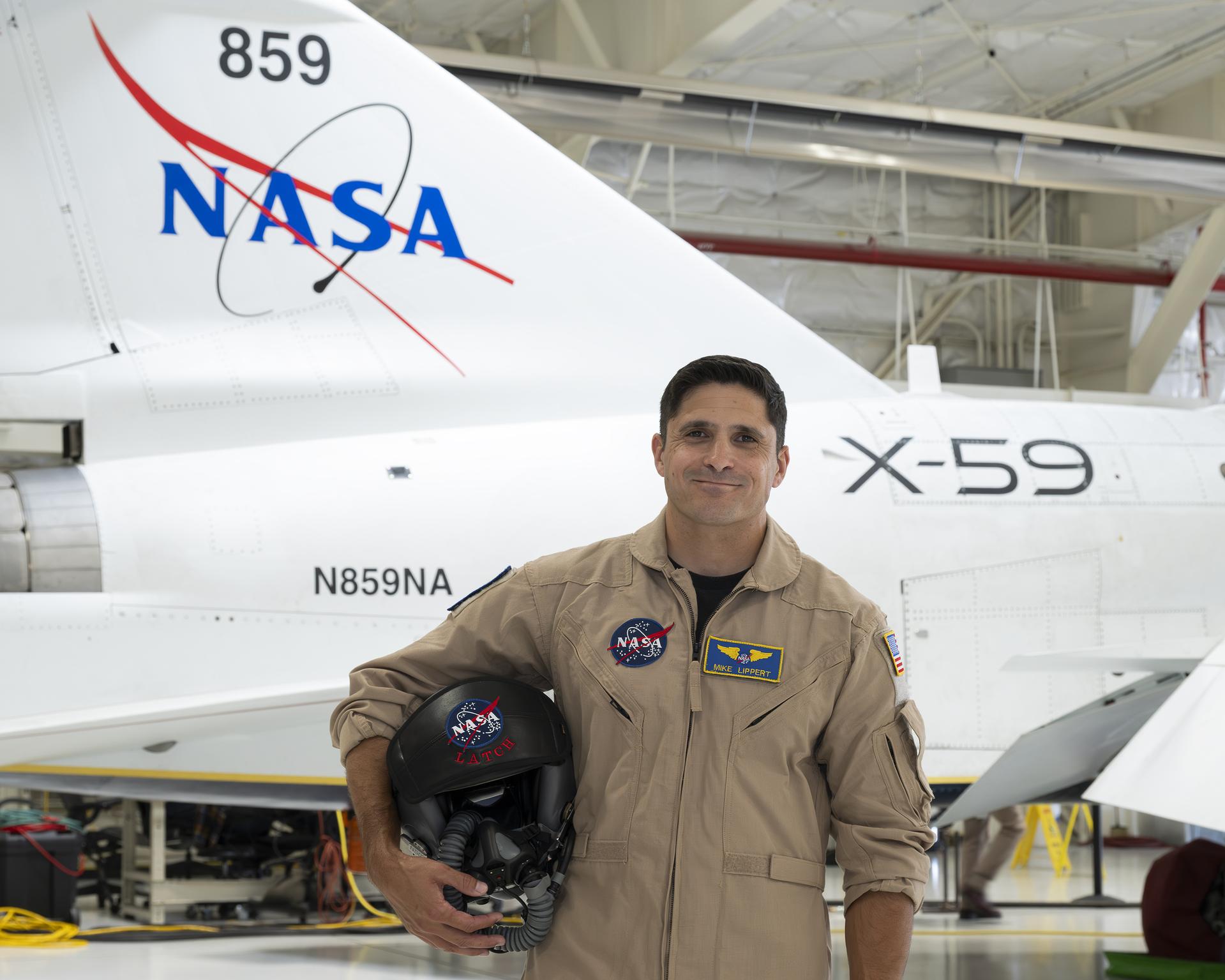
NASA Test Pilot Mike Lippert Flies X-59 Supersonic Aircraft
NASA test pilot Mike Lippert completed his first flight of the X-59 quiet supersonic research aircraft on October 21, 2026, taking off from Armstrong Flight Research Center in California. This flight followed scheduled maintenance and a system review after a period of extensive testing for the aircraft.