NASA's Jet Propulsion Laboratory Marks 90th Anniversary and Prepares New Missions
The research center outlines upcoming robotic flights to Mars, the Moon, and deep space.
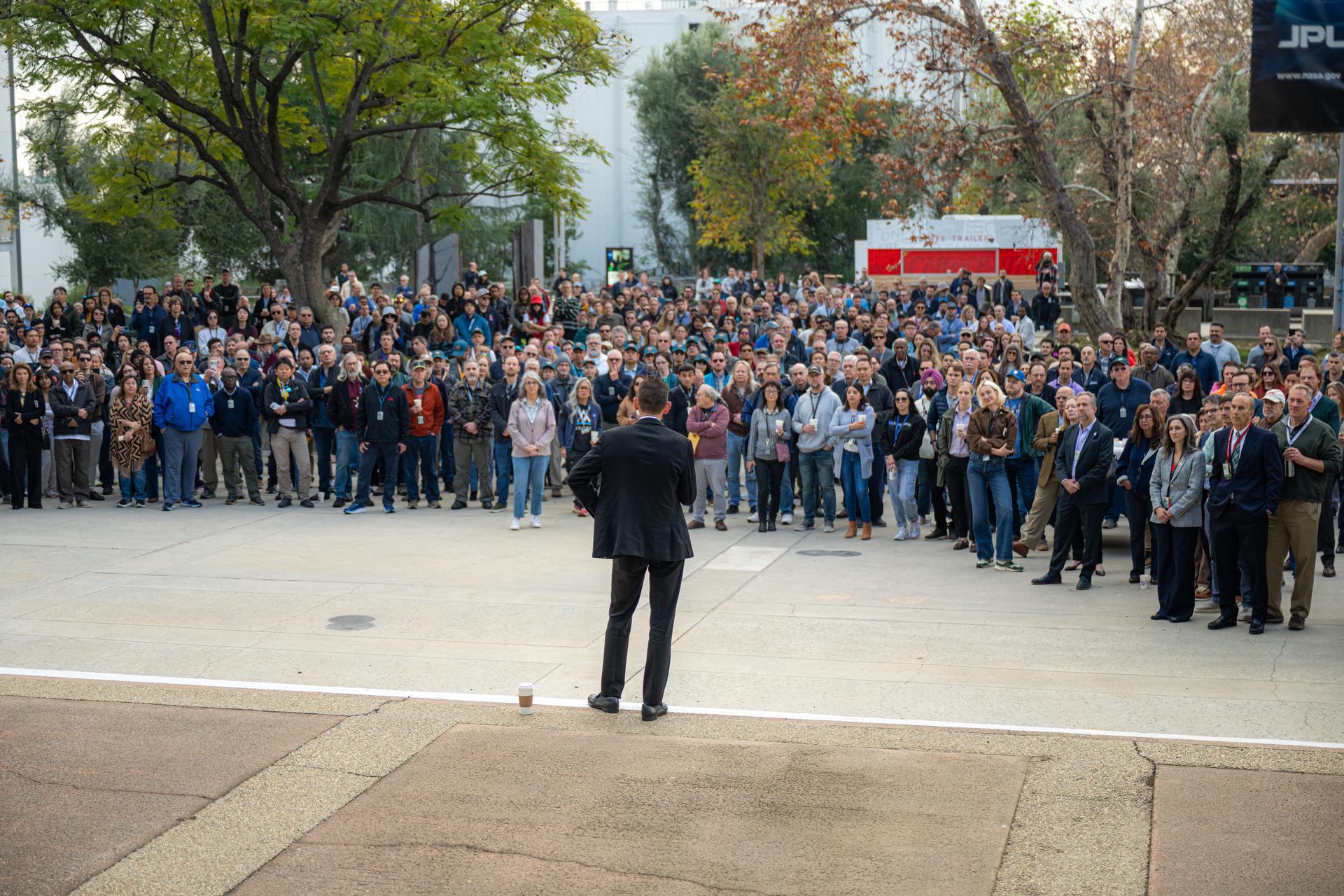 Photo: NASA / NASA/John Kraus
NASA's Jet Propulsion Laboratory is commemorating 90 years of operations dating back to Oct. 31, 1936, when a group of Caltech graduate students and enthusiasts conducted initial rocket propulsion trials in Pasadena's Arroyo Seco. The institution, now managed by Caltech on behalf of NASA, originated as an Army contractor before launching Explorer 1, the first U.S. satellite, in 1958. It became part of NASA later that same year.
Looking forward, the laboratory is planning multiple robotic missions slated for launch later this decade. Among them is SkyFall, an exploration project aimed for 2028 that will release three rotorcraft mid-descent over Mars to search for ice reserves and track local weather. Also scheduled for 2028 is MoonFall, an initiative designed to land several large propulsive drones at the lunar South Pole to support NASA's planned Moon Base.
Other near-term initiatives include the SunRISE experiment, scheduled for 2027, which will deploy six small satellites to monitor solar phenomena, as well as the NEO Surveyor telescope intended to track hazardous near-Earth asteroids. The laboratory is also engineering several Earth-observation instruments, including the collaborative NISAR radar satellite with the Indian Space Research Organisation to assess surface changes linked to natural hazards.
The 90-year milestone coincides with an operational record for the Voyager 1 spacecraft, which is projected to reach a distance of one full light-day—approximately 16 billion miles from Earth—on Nov. 18. According to JPL Director Dave Gallagher, the laboratory's pioneering ventures across its history have transformed humanity's understanding of space as teams prepare to deploy subsequent exploration programs.
This story was prepared with AI assistance from the sources listed below and reviewed by our editors.
Sources
Related stories

NASA's Swift Mission Concludes After Nearly Two Decades of Scientific Contributions
NASA's Neil Gehrels Swift Observatory has concluded its science mission due to its orbital altitude, which now prevents stable observation. The observatory, launched in 2004, significantly advanced understanding of cosmic events like gamma-ray bursts and supernovae.

NASA and Partners Expedite Lunar Lander Development for 2028 Missions
NASA is working with commercial partners Blue Origin and SpaceX to accelerate the development of human landing systems for future crewed missions to the Moon, aiming for a long-term presence on the lunar surface.

NASA Invites Media to 2026 von Braun Space Exploration Symposium
NASA is inviting media to the 2026 von Braun Space Exploration Symposium, which will take place from October 26 to October 28 at the University of Alabama in Huntsville, focusing on humanity's return to the Moon and sustainable lunar infrastructure.