NASA's Swift Mission Concludes After Nearly Two Decades of Scientific Contributions
 Photo: NASA
NASA's Neil Gehrels Swift Observatory has ended its scientific operations, according to NASA. The spacecraft is currently orbiting Earth at an altitude of less than 171 miles (275 kilometers), where increased atmospheric drag hinders its telescopes' ability to maintain a steady gaze on astronomical targets.
The Swift mission conducted its final observation on October 20 and is anticipated to re-enter Earth's atmosphere within the coming weeks. Shawn Domagal-Goldman, director of the Astrophysics Division at NASA Headquarters, stated that Swift provided an "incredible, lasting return on investment for the nation," operating for over ten times its initial two-year primary mission.
During its operational period, Swift observed more than 2,000 gamma-ray bursts and studied over 1,400 supernova explosions, among other cosmic phenomena. The mission's data has contributed to approximately 7,000 published scientific papers, according to NASA.
S. Bradley Cenko, the mission's principal investigator at NASA's Goddard Space Flight Center, noted that Swift was designed to study gamma-ray bursts, which are rapid and fleeting. The observatory's capability to quickly detect, locate, and image these bursts, typically within about a minute, was crucial for observing their afterglows before they faded.
Launched on November 20, 2004, the mission was later renamed in 2018 to honor its first principal investigator, Neil Gehrels. NASA plans to continue prioritizing rapid responses to cosmic events by utilizing existing missions to bridge the gap left by Swift's conclusion.
This story was prepared with AI assistance from the sources listed below and reviewed by our editors.
Sources
Related stories

NASA and Partners Expedite Lunar Lander Development for 2028 Missions
NASA is working with commercial partners Blue Origin and SpaceX to accelerate the development of human landing systems for future crewed missions to the Moon, aiming for a long-term presence on the lunar surface.

NASA Invites Media to 2026 von Braun Space Exploration Symposium
NASA is inviting media to the 2026 von Braun Space Exploration Symposium, which will take place from October 26 to October 28 at the University of Alabama in Huntsville, focusing on humanity's return to the Moon and sustainable lunar infrastructure.
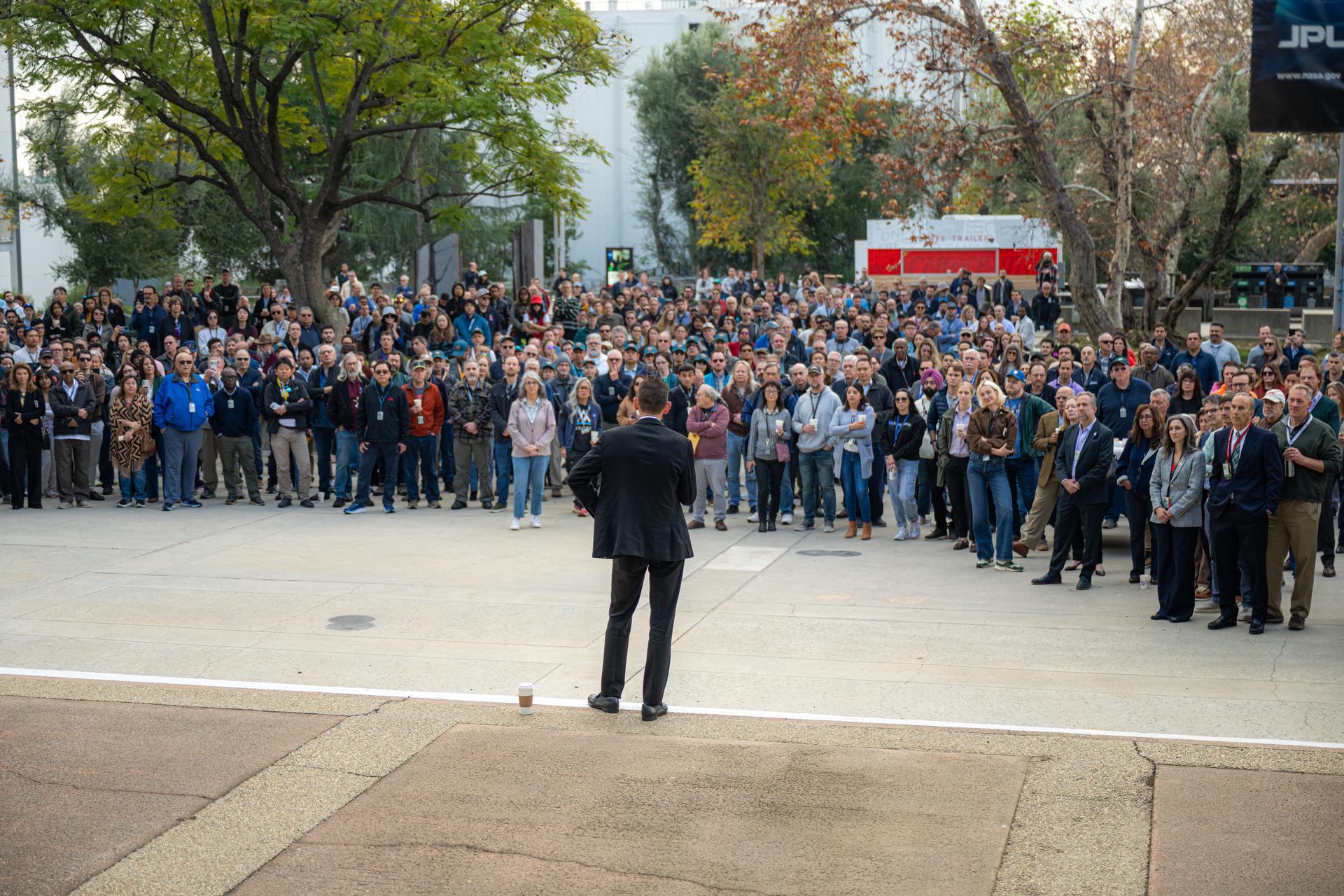
NASA's Jet Propulsion Laboratory Marks 90th Anniversary and Prepares New Missions
NASA's Jet Propulsion Laboratory is marking 90 years since its earliest rocket tests while developing new robotic exploration missions to Mars, the Moon, and the wider solar system.