NASA Langley Research Center Releases Technical Guidance on Instrumented Hammer Testing
New guidelines clarify that idealized waveforms are not required for valid structural testing
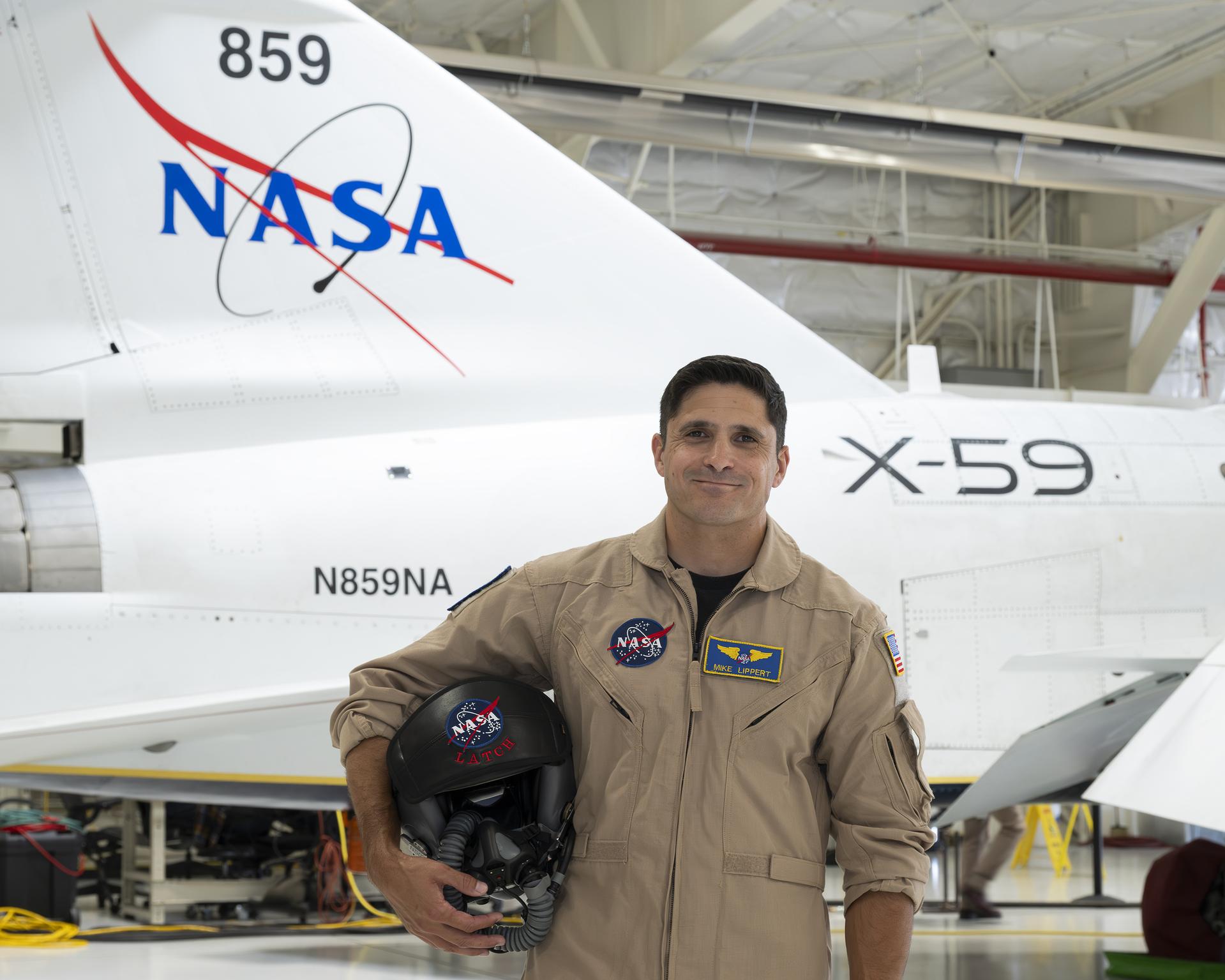
 Photo: NASA / NASA
Technical Guidance on Hammer Testing
NASA's Langley Research Center has published technical bulletin TB 26-09, which provides updated guidance on the use of instrumented hammer tests for structural analysis. According to the release, these tests do not necessitate the use of an idealized single half-sine waveform. Instead, the agency notes that when force and response are measured with precision, factors such as crest ripples and separated contacts remain valid inputs for analysis.
Evaluating Test Adequacy
The guidance states that the shape of the force does not inherently invalidate a test record. Rather, the adequacy of a test depends on several technical factors, including signal-to-noise ratio, bandwidth, and measurement accuracy. NASA advises that the appearance of a half-sine wave alone is insufficient to establish the validity or adequacy of a test. Instead, practitioners should evaluate each test based on its intended objective and ensure that the excitation covers the necessary frequency, amplitude, and nonlinear response ranges.
Recommended Best Practices
To ensure reliable results, NASA recommends that researchers measure the complete applied force using proper calibration, time synchronization, and dynamic range. Furthermore, response measurements must be verified to ensure they are not saturated or clipped. The agency suggests that tests should only be rejected or repeated if a specific deficiency in measurement, excitation, or coverage is identified.
This story was prepared with AI assistance from the sources listed below and reviewed by our editors.
Sources
Related stories
NASA’s Johnson Space Center Marks 65 Years of Human Spaceflight Leadership
NASA’s Johnson Space Center in Houston is celebrating 65 years of operations, having served as the hub for human spaceflight from the Mercury project to current lunar exploration efforts.

NASA's NEO Surveyor Sunshade Under Inspection
A technician was observed inspecting the sunshade for NASA's Near-Earth Object (NEO) Surveyor mission, a structure designed to maintain the infrared space telescope's temperature and provide power during its search for asteroids and comets.